
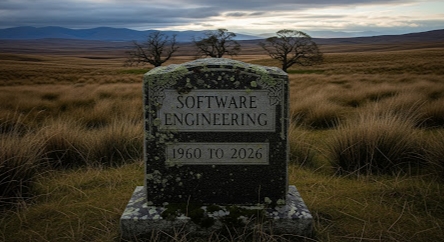
The software engineer is dead; so say the headlines. Layoffs are in the news and there’s even talk of CEO/founders building entire systems while their Dev teams look on in wonder.
The world of software development has seen tool after tool come along and claim to be the end of software engineering as a profession.
“Now anyone can write software” has always been the mantra. Every time, the reality has been that the tool works well in the right hands, and those hands happen to belong to skilled software engineers.
What people seem to forget is that with each cycle, the demand for software based solutions increases, and so does the demand for software engineers. We’re like cockroaches; no matter how hard you try to get rid of us, you move one picture and hundreds more appear.
I’m pretty sure, once the dust settles on this particular cycle, we’ll find the same has happened. The job will change again, as it does every few years, but that’s nothing new.
During my career I’ve written code in more programming languages than I can even recall, starting with machine code for various processors, and working up through all five “generations”.
I’ve written directly to memory on a 6 digit numerical display which was very painful, but educational. I’ve coded in a text editor and lived through the Emacs vs Vi wars. I’ve used visual languages that promised freedom from coding, complicated “reasoning” languages, and even languages designed for niche parallel processing chips (anyone remember the transputer and Occam?)
With each very short cycle of change, writing the code became easier. IDEs went from just an editor with a debug mode to sophisticated software development tools with predictive text that correctly completed lines of code before you’d even got past the first few characters.
Productivity increased each time, and so did cognitive load. The skill required to keep up increased, but that was the thing that made the profession interesting.
AI is just the next phase in that continuous cycle of change and improvement. All the hype is the same as every time before, and all the same criticisms are levelled against it. Once again, the two extremes are shouting with the loudest voices.
It seems you’re either on the side of the AI evangelists who herald the dawn of the super brain, or you’re one of the luddites demanding it all be burned to the ground.
As with all extremes, neither is a sustainable position. To function in the professional world of software engineering, you have to embrace the new tools and work out how to make them work well to produce the right output. As an engineer, however, you also have to be wary of wild claims and trust only what can be openly demonstrated.
A prediction:
AI will become integral to software development, and demand will increase to meet supply.
In 5 years time middle managers will still be wondering why they need so many software engineers, and how they’re going to find them.