
People are missing something important in the AI prompting debate, and that’s the difference between what you say and how you say it. Turns out, it’s not what you say that matters.
Read to the end to see why you’re going to need experienced software engineers to drive AI coding agents.
When communicating with each other, we strive for clarity of meaning. We try to avoid ambiguity because humans have the ability to reason and infer. The listener fills any gaps in what we say with their own conclusions. This leads to misunderstandings and mistakes.
Contrary to what the hype merchants and the ignoranti would claim, LLMs can’t reason; they can only associate. Mistaking association for reasoning is like mistaking correlation for causation.
Like humans, LLMs misinterpret instructions, but for different reasons. They don’t have opinions. Instead, they fill the gaps with content from the training set. They do that by linking together the chains of words most closely associated with the prompt.This is why how you say it matters. If you want a GenAI to create convincing art in a chosen style, asking isn’t enough.
You have to tap into the right material, and you do that by using the style of language used by the community that talks most about it.LLMs aren’t trained on sanitised data, annotated by archivists. They’re trained on the outpourings of a myriad of humans with common interests. Those people use their own form of language to communicate intent and opinion.
If, for example, you want to reproduce art in an Anime style, you could just describe it. You might even get what you think are decent results, but you won’t impress the Anime art community.
However, if you learn to write in the style of a fan commenting on art in an Anime forum you’ll level up your prompting game.The reason for this relates to the thing the current crop of AIs rely on – association. The meaning isn’t important; it’s the vernacular of the community that matters.
If you shape your prompts to match the way the community talks, the LLM will gravitate towards the content that most closely connects to that language – exactly the content you’re trying to reproduce.
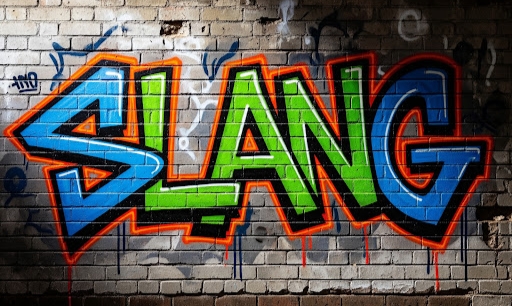
The image below is a good example. The prompt was written in the style of a middle class boy from Harrogate (me), and the graffiti reflects that. It’s unconvincing and it’s far from “street”.
So let’s relate that to non-coders asking coding agents to write software. English speaking software engineers don’t speak English when they describe software.
Admit it. You’ve said it yourself, many times; often in frustration.
We engineers have our own language. When we describe software, whether that be in blog posts, in documentation or on forums like stack exchange, we use a unique vernacular.
If you haven’t learned to programme you don’t know that language. That’s why you need a software engineer to drive a coding AI agent.
You’re trying to instruct it in English, and it only understands geek.